If you’re weighing a living roof, the main green roof benefits are cooler roof surfaces, lower energy use and better stormwater control. The trade-off is a higher upfront cost than conventional roofing.
This guide sits within the wider topic of sustainable building, and it looks at what a green roof does, what it costs and how to judge whether it pays off.
| Item | Value |
|---|---|
| Starting install cost, simpler extensive roof | $10 per square foot |
| Starting install cost, intensive roof | $25 per square foot |
| Annual maintenance, either type | $0.75-$1.50 per square foot |
| Conventional roof surface on a hot summer day | Up to 90°F (50°C) warmer than a green roof |
| Lifetime saving in a University of Michigan study | About $200,000 |
These figures come from the US EPA’s page on green roofs, which was last updated on June 27, 2016. Prices and research move on, so check the source before you rely on them.
What is a green roof?
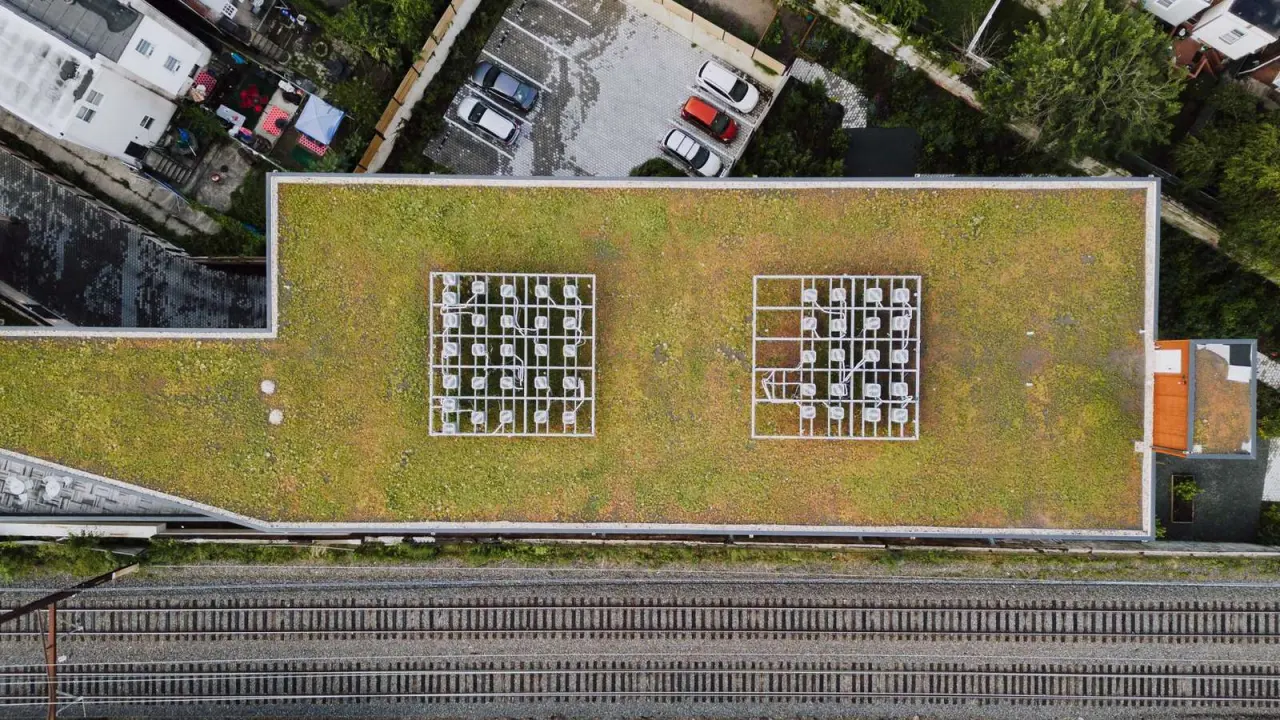
A green roof, or rooftop garden, is a vegetative layer grown on a rooftop. It provides shade and removes heat from the air through evapotranspiration, which lowers the temperature of the roof surface and the air around it.
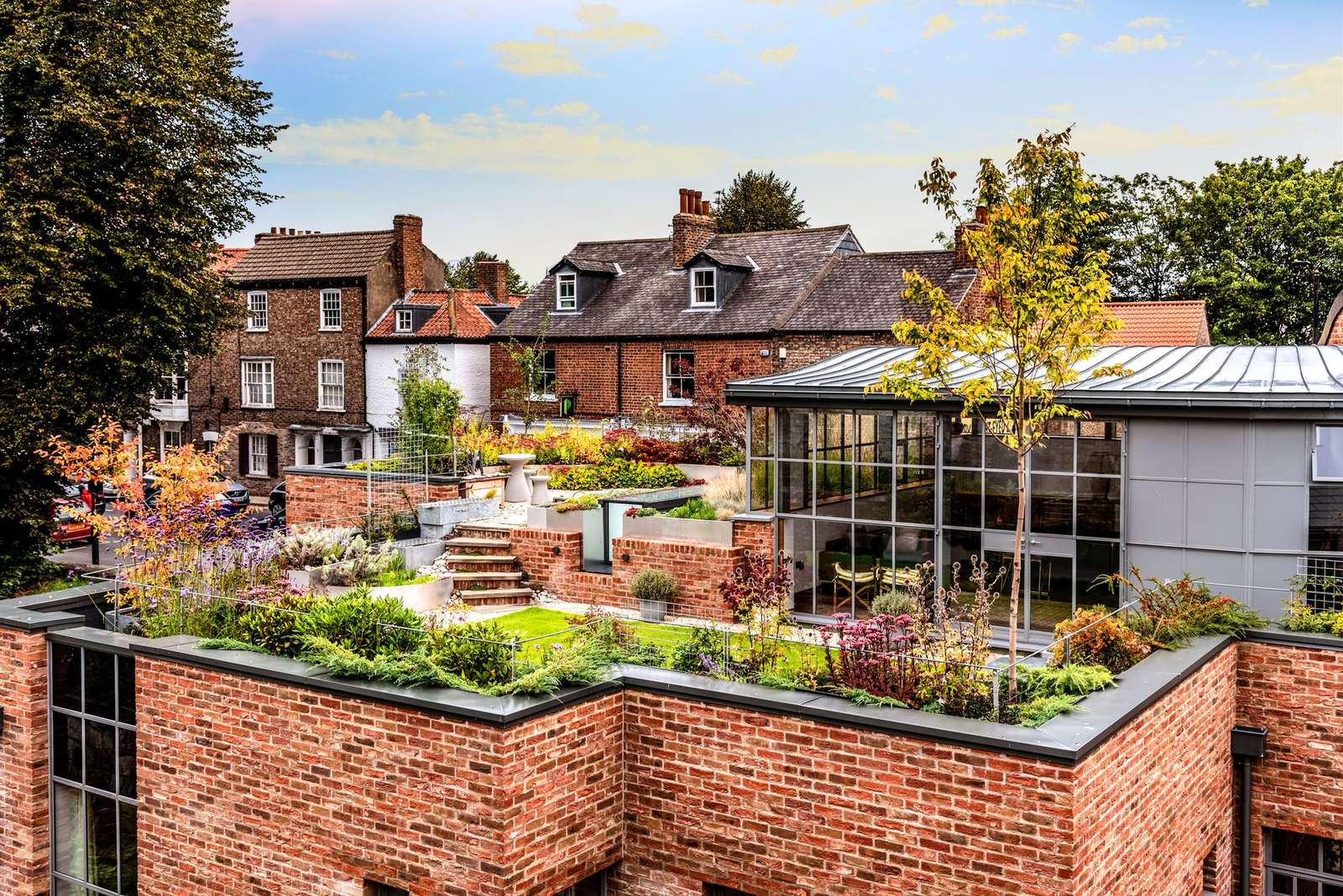
The range is wide. A green roof can be as simple as a 2-inch covering of hardy groundcover or as complex as a fully accessible park complete with trees.
They suit many building types, from industrial facilities to private residences. The EPA reported roughly 8.5 million square feet installed or in progress in the United States as of June 2008, so treat that as a historical snapshot rather than a current count.
Green roof benefits at a glance
The EPA’s list of benefits goes beyond a nicer view. Each one below is described as something a green roof can do, not a guaranteed result.
- Reduced energy use: green roofs absorb heat and act as insulators, reducing the energy needed for cooling and heating.
- Less air pollution and fewer emissions: lower air conditioning demand can decrease the associated air pollution and greenhouse gas emissions.
- Health and comfort: reducing heat transfer through the roof can improve indoor comfort and lower heat stress during heat waves.
- Stormwater management: green roofs can reduce and slow runoff, and they also filter pollutants from rainfall.
- Quality of life: they can add aesthetic value and habitat for many species.
The cooling effect is the easiest to picture. On hot summer days a green roof surface can be cooler than the air, while a conventional rooftop surface can be up to 90°F (50°C) warmer.
If energy use is your main concern, it is worth reading about passive house design alongside this guide, because a roof is only one part of how a building gains and loses heat.
Drawbacks and costs to expect
The main drawback is upfront cost. The EPA says the initial costs of green roofs are higher than those of conventional materials.
Its estimates for installation start at these levels:
- $10 per square foot for simpler extensive roofing.
- $25 per square foot for intensive roofs.
- $0.75-$1.50 per square foot each year for maintenance, on either type.
The EPA cites a 2003 design guideline for these cost figures. They are old, so use them to compare roof types, not as a quote for your project.
Owners can help offset the difference through reduced energy and stormwater management costs. They may also gain from the longer lifespan of green roofs compared with conventional roofing, though the source says “potentially”.
The evidence is still maturing. As of the EPA page’s 2016 update, researchers and communities were only beginning to run detailed full life-cycle analyses of the net benefits.
A worked example: the University of Michigan study
One of the few concrete comparisons on the EPA page is a University of Michigan study. It compared a conventional roof with a 21,000-square-foot (1,950 m2) green roof and all its benefits, such as stormwater management and improved public health from absorbing nitrogen oxides.
In 2006 dollars, the green roof would cost $464,000 to install versus $335,000 for a conventional roof. That is a gap of $129,000 at the start.
Over its lifetime, though, the green roof would save about $200,000. Nearly two-thirds of those savings would come from reduced energy needs in the building.
The EPA credits this to a 2008 paper in Environmental Science and Technology. Because the comparison counts wider benefits such as public health, read it as a whole-life estimate rather than a payback promise for a single owner.
How to weigh a green roof for your project
There is no universal answer, but a simple order of questions keeps the decision grounded.
- Name your goal. Cooling, energy savings, stormwater control, habitat and appearance are all different priorities.
- Choose the ambition level. A thin covering of groundcover and a fully accessible park with trees sit at opposite ends of the cost range.
- Price both roofs. Get current local figures for installing and maintaining a green roof and for a conventional alternative.
- Count the whole life. Weigh energy, stormwater and lifespan benefits against the higher starting cost, as the Michigan study did.
Roofing is only one material choice in a build. The guide to recycled building materials covers another way to lower a project’s footprint.
Frequently asked questions
Do green roofs lower energy use?
Show answer
The EPA says they absorb heat and act as insulators, reducing the energy needed for cooling and heating. In the University of Michigan study, nearly two-thirds of the lifetime savings came from reduced energy needs.
How much does a green roof cost?
Show answer
The EPA’s estimates start at $10 per square foot for simpler extensive roofing and $25 per square foot for intensive roofs, with maintenance of $0.75-$1.50 per square foot a year. Those figures rely on a 2003 guideline, so get current local prices.
Can a green roof go on a house?
Show answer
According to the EPA, green roofs can be installed on a wide range of buildings, from industrial facilities to private residences.
Do green roofs help with stormwater and wildlife?
Show answer
The EPA says they can reduce and slow stormwater runoff and filter pollutants from rainfall. It also says they can provide habitat for many species.