Wondering whether rammed earth construction suits your build? You get dense, hard, thermally massive walls from compacted subsoil, but you’ll need added insulation, careful detailing and a decision on cement stabilisation.
This guide is part of our wider look at sustainable building, and it covers how the walls are made, where they perform well and where they struggle.
| Item | Value |
|---|---|
| Compressive strength, unstabilised rammed earth | Maximum of 1 MPa |
| Compressive strength, stabilised rammed earth | Approximately 10 MPa |
| Typical cement share of a stabilised mix | 6 or 7% by volume |
| Fire resistance of a 300 mm wall | At least 90 minutes |
| U-value of a 300 mm wall | 1.5–3 W/m²K |
These figures come from GreenSpec’s rammed earth page. They can change, so check the source before you rely on them.
What is rammed earth construction?
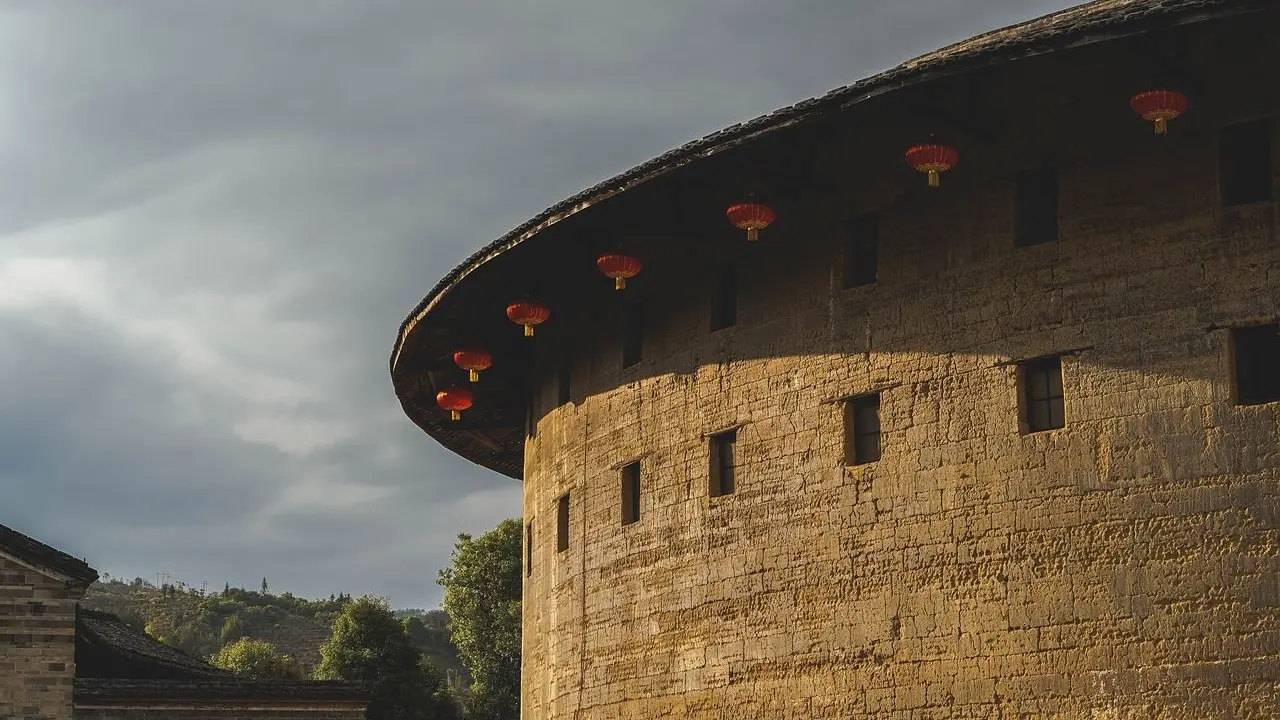
Rammed earth walls, also called pisé, are built by compacting moistened subsoil into place between temporary formwork panels. When the wall dries, the result is a dense, hard, monolithic wall.
It is an ancient form of construction, usually associated with arid areas, and plentiful examples remain around the world. GreenSpec reads that as evidence of a successful and durable way of building, and notes that a few historical rammed earth buildings can be found in the UK.
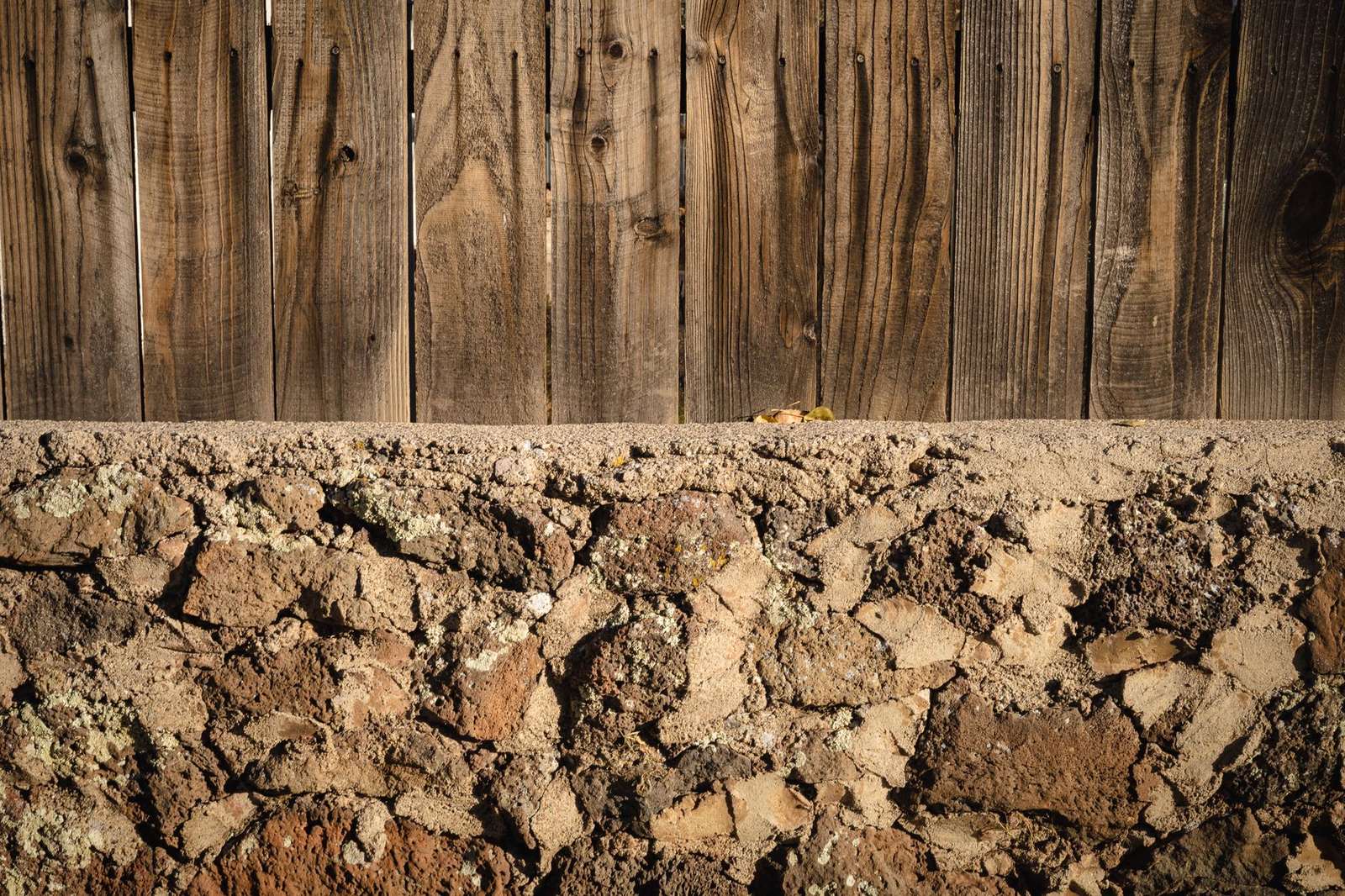
In recent years, rammed earth has become popular with environmentally conscious architects. GreenSpec lists these contemporary UK examples:
- The AtEIC building at CAT in Powys
- The Genesis Project in Somerset
- Rivergreen Centre at Aykley Heads in Durham
Stabilised versus unstabilised walls
The main choice you face is whether to add a stabiliser. GreenSpec gives a maximum compressive strength of 1 MPa for unstabilised rammed earth and approximately 10 MPa for stabilised rammed earth, in its building regulations summary.
Stabilising can avert many durability shortcomings, mainly external surface protection, water resistance, shrinkage and strength. The most common stabiliser is cement, which typically makes up 6 or 7% by volume of the mix, and stabilising has become general practice in Australia, where it is perceived to reduce uncertainty and risk.
The catch is the carbon. Cement has high embodied energy, so many people see it as compromising the environmental credentials of rammed earth. GreenSpec adds that this might be balanced out once the extra protection and maintenance that unstabilised walls need are counted.
Strengths and trade-offs
GreenSpec lists the advantages of rammed earth as follows:
- A distinct appearance, using natural and readily available material.
- Low embodied energy, at a level similar to brick veneer construction.
- Unstabilised earth is reusable after demolition.
- A hygroscopic, high-moisture-mass wall that helps regulate humidity.
- High thermal mass, though work is still underway to quantify its extent.
- Airtight construction is achievable.
- Use of local soils supports sustainability practices.
The same page is just as direct about the drawbacks, so weigh them before you commit:
- Concerns over durability mean the walls require careful detailing.
- Not all soil types are appropriate.
- High levels of construction quality control are required.
- The construction period is longer than average.
- High clay content can cause moisture movement, which structures may need to accommodate.
- There are no UK codes of practice, and few modern UK examples exist, so the material is relatively untested in the UK climate.
Insulation, moisture and fire design
Rammed earth has poor thermal resistance. GreenSpec gives a U-value of 1.5–3 W/m²K for a 300 mm wall, so insulation needs adding in external wall applications.
The strategic decision is where to put it. With external insulation, the wall is protected from weathering and the thermal mass stays exposed inside, but you lose the characteristic appearance outside. Suggested materials include hemp-lime, proprietary renders, mineral-based renders and hygroscopic insulation.
Any external cladding and finish must be vapour-permeable so moisture can evaporate. Internal insulation is more flexible, because moisture is encouraged to evaporate externally, but it should not be applied directly to the face of the wall. GreenSpec cautions that there are few UK examples of rammed earth walls combining insulation, and that its suggested solutions have yet to be thoroughly tested.
Water and fire need design attention too:
- Rising damp is prevented by DPCs.
- Weather erosion is reduced through detailing such as extended eaves, raised plinths and rainscreens.
- Per GreenSpec, rammed earth can be classed as non-combustible, and a 300 mm wall can give fire resistance of at least 90 minutes.
If you are targeting very low energy use, the Elsevier book Modern Earth Buildings (first edition, July 2012) includes a chapter on passive house design as a benchmark for thermal mass fabric integration.
Where rammed earth fits in the UK
GreenSpec judges that the prospects of rammed earth entering mainstream construction as a structural material are limited. It cites formwork and labour costs, together with a climate of relatively high humidity and moderate external temperatures.
Its likely future uses are as thermal mass, as internal load-bearing unstabilised walls, and as external load-bearing stabilised walls. Modern methods are widely tried and tested overseas, for example in Australia.
For approval, the fitness of materials is determined by sampling, lab testing or precedence. Quality is measured against the specification, test panels and previous works.
If you are comparing earth with other natural options, a natural next question is is bamboo a sustainable building material, which gives you a very different low-impact option to set beside it.
Frequently asked questions
Can rammed earth carry structural loads?
Show answer
Yes. GreenSpec says rammed earth has proved suitable for both loadbearing and non-loadbearing construction, with stabilised walls reaching approximately 10 MPa compared with a maximum of 1 MPa unstabilised.
Do rammed earth walls need extra insulation?
Show answer
For external walls, yes. GreenSpec gives a U-value of 1.5–3 W/m²K for a 300 mm wall and says insulation needs adding.
Is stabilised rammed earth still sustainable?
Show answer
It is debated. Cement has high embodied energy and many see it as compromising the material’s environmental credentials, though that might be balanced out by the protection and maintenance that unstabilised walls need.
Can rammed earth be reused after demolition?
Show answer
Unstabilised earth can. GreenSpec lists it as reusable post-demolition, and it notes that adding cement stabilisation can compromise the environmental credentials.