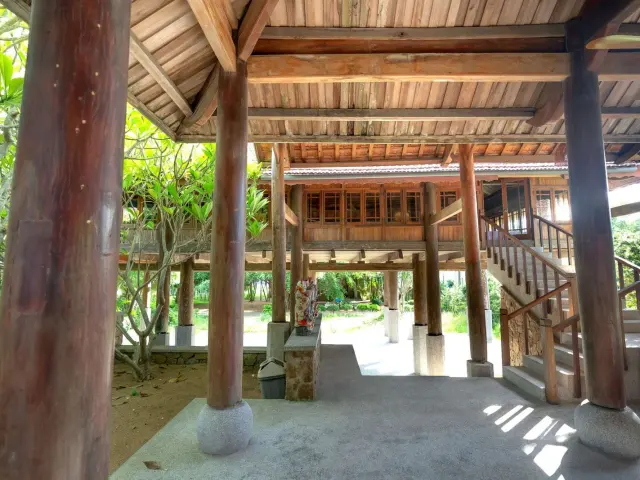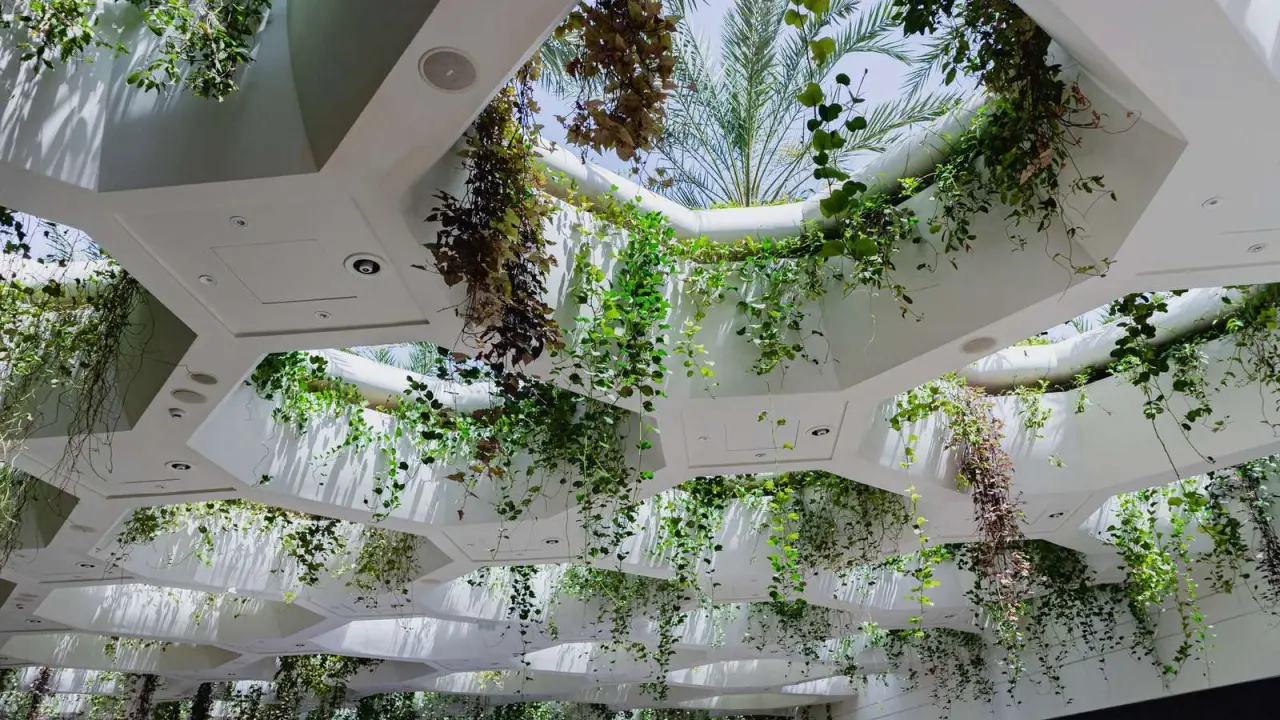
Wondering whether bringing nature indoors is just about houseplants? Biophilic design goes further: it uses patterns like views, water and natural materials to support your well-being in buildings.
Biophilic design is one strand of sustainable architecture, where a building is judged by how it treats the people inside it as well as the planet.
| Item | Value |
|---|---|
| Release of the anniversary edition of the 14 Patterns framework | 4 December 2024 |
| First edition of the 14 Patterns framework | 2014 |
| Time modern cities have been common | Last 250 years |
| Projected share of world population living in cities | 70 percent |
| New patterns that have emerged since the original edition | One |
These figures come from a December 2024 feature in the Living Architecture Monitor. Projections and standards change, so check the source before you rely on them.
What is biophilic design?
Biophilic design is the practice of shaping buildings so that people (re)connect with an experience of nature. Its author-advocates describe it as becoming more of a necessity than a luxury for health and well-being.
The best-known framework is 14 Patterns of Biophilic Design, published by Terrapin Bright Green. The first edition appeared in 2014, and a 10th anniversary edition was released on 4 December 2024. The feature behind this guide was written by Bill Browning, who is a co-founder of Terrapin Bright Green, so read it as an insider’s account.
The patterns go well beyond a pot plant on a desk. Examples named in the feature include:
- Visual Connection to Nature, such as a view of greenery;
- Presence of Water;
- Material Connection to Nature, meaning natural materials in the space;
- Biomorphic Forms, which echo shapes found in nature;
- Risk/Peril and Awe, which are more dramatic spatial experiences.
Why biophilic design matters as cities grow
Browning points out that in the 12,000 years since humans began farming and reshaping the landscape, modern cities have been common for only the last 250 years. More people around the world now live in cities than in the countryside.
The same feature notes that 70 percent of the world’s population is projected to live in cities in the coming decades. For Browning, that makes designs that reconnect people with nature more important.
Interest has also moved into the mainstream. As of the December 2024 feature, biophilic design credits can be found in green building standards such as LEED, WELL, Living Building Challenge, Fitwel, Living Architecture Performance Tool and BREEAM. Browning adds that a number of tech companies and hotel brands have their own biophilic design standards.
The patterns in real buildings
The feature gives a few neutral, real-world examples of the patterns at work. They show that biophilic design is not limited to homes or offices.
- In Singapore, the Khoo Teck Puat Hospital’s intensive green roof serves as a Visual Connection to Nature for patients in the adjacent ward.
- Portland International Airport’s new terminal uses Visual Connection to Nature, Biomorphic Forms and a Material Connection to Nature to lower passenger stress.
- The Park Royal Collection hotel in Singapore features Visual Connection to Nature, Presence of Water, Risk/Peril and Awe among its biophilic experiences.
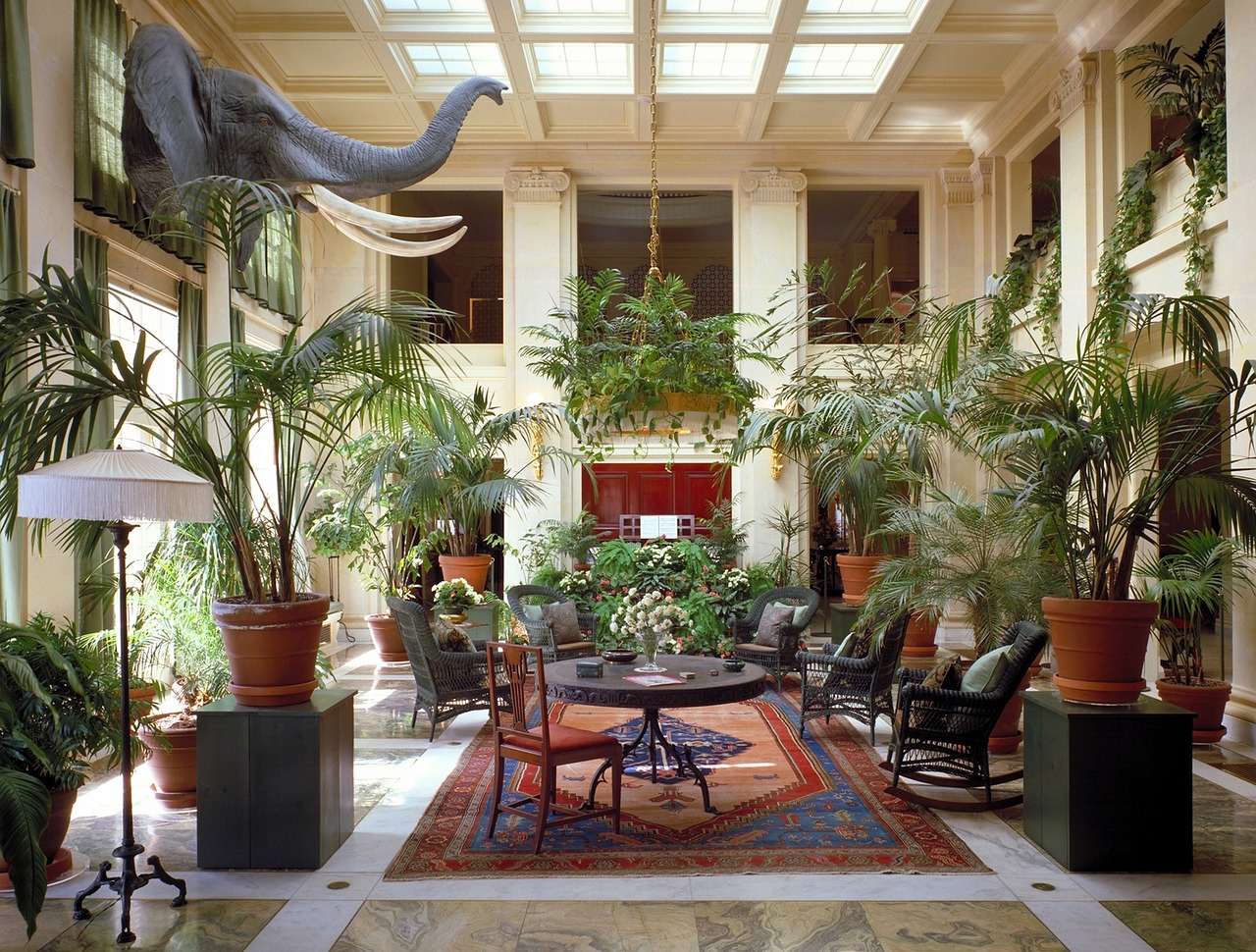
Notice that each example combines several patterns rather than relying on one. A layered approach seems to be the norm in the projects the feature describes.
How researchers test whether it works
Checking whether a pattern actually helps is harder than it sounds. Browning writes that variability in the built environment makes verification challenging, and that tools such as fMRI and EEG add complexity and cost.
What has changed is access to cheaper equipment. Smart watches, smartphone-enabled sensors, VR systems with gaze attention tracking and advanced mobile EEG have come into use in the last 10 years. Gaze tracking, for example, is being used to predict responses to biophilic interventions in proposed designs (Yin et al., 2020).
The takeaway for you is to treat any single claim with care. The science is described as rapidly evolving, and the patterns will be refined as new evidence arrives.
Awe and repeated exposure
Two findings from the feature stand out. The first is Awe: Browning says the team considered a 15th pattern in 2014 but the science on awe was lacking at that point. Today, awe experiences are understood to involve an overloading of part of the brain, followed by a pause and a recalibration of one’s world view.
After an awe experience, people tend to be more humble and charitable and show more pro-social behaviour (Piff et al., 2015; Stellar et al., 2018). The feature gives the nave of Notre-Dame Cathedral in Paris as a built example of awe.
The second finding is about repeated exposure. A worry was that biophilic responses would fade as people got used to a space. Viewing an image such as a Japanese garden was found to hold roughly the same level of interest over time (Biederman and Vessel, 2006), and studies of a biophilic classroom (Determan et al., 2019) and a hospital breakroom (Phillips, 2023) indicate that responses actually improve with repeated exposure.
What you can take from it for your own space
The source is about frameworks and research, not a home-improvement checklist, so treat these as ideas rather than prescriptions. Each one maps to a pattern named above.
- Position seating where you have a view of greenery, which supports a visual connection to nature.
- Choose natural materials where you can, for a material connection to nature.
- Look for shapes and forms that echo nature, in line with the biomorphic forms pattern.
- Build nature into daily routines, since Stephen Kellert held that repeated and sustained contact through the day is important.
To see how climate and place shape the way buildings work with their surroundings, read about tropical architecture and vernacular architecture.
Frequently asked questions
Is biophilic design just adding plants?
Show answer
No. The 14 Patterns framework includes views, water, natural materials, biomorphic forms and spatial experiences such as risk/peril and awe, as well as greenery.
Does the effect of biophilic design wear off?
Show answer
The evidence cited in the December 2024 feature suggests not. Interest in a Japanese garden image stayed roughly level over time (2006), and studies of a classroom (2019) and a hospital breakroom (2023) indicate responses improved with repeated exposure.
Do green building standards recognise biophilic design?
Show answer
As of the December 2024 feature, biophilic design credits appear in standards including LEED, WELL, Living Building Challenge, Fitwel, Living Architecture Performance Tool and BREEAM. Check each standard’s current documents for the exact requirements.
Has the list of patterns changed since 2014?
Show answer
Browning writes that one new pattern has emerged since the original edition and that more may appear over time. He describes the science of biophilia as a rapidly evolving field.