Wondering how sustainable architecture actually helps when buildings drive so much pollution? You get lower emissions by designing for less energy, cleaner supply and reuse, and the latest UN figures show why it matters.
| Item | Value |
|---|---|
| Operational emissions from buildings, 2024 | 9.9 gigatonnes of CO₂ (up 1 per cent) |
| Share of global emissions from buildings and construction | Nearly 37 per cent |
| Share of global energy use | 28 per cent |
| Global floor area, 2024 | 273 billion square metres |
| Renewables’ share of buildings’ energy demand, 2024 | 17.3 per cent |
| Investment needed by 2030 to align with climate goals | USD 5.9 trillion |
These figures come from news coverage of the UNEP and Global Alliance report, published on May 23, 2026. Figures can change with each new edition, so check the source before you rely on them.
What is sustainable architecture?
Sustainable architecture is the practice of designing buildings that use fewer resources and cause less harm across their whole life, from choosing materials to construction, daily use and eventual reuse. It treats a building as a system that must work for the people inside it and for the climate outside it.
The idea is broader than adding solar panels to a conventional design. It starts with the site, the climate, the orientation and the shape of the building, and only then moves to equipment and technology.
A useful way to think about it is as a set of questions you can ask of any project:
- How much energy will the building need once people move in?
- Where will that energy come from?
- Which materials were chosen, and could the structure be reused instead of replaced?
- Does the design make people healthier and more comfortable?
Why do the numbers matter now?
The Global Status Report for Buildings and Construction (2025-2026), produced by UNEP and the Global Alliance for Buildings and Construction, found that operational emissions from buildings rose by 1 per cent to 9.9 gigatonnes of CO₂ in 2024. The sector therefore remains a major source of greenhouse gases.
The footprint is also growing. In 2024, global floor area grew by 1.7 per cent to 273 billion square metres, driven largely by construction in emerging economies, including in Southeast Asia.
UNEP Executive Director Inger Andersen said that half of the world’s buildings are yet to be constructed or renovated by 2050. That makes the choices designers make today a long-lasting matter, because a building tends to stay in place for generations.
Efficiency is improving, but not fast enough
According to the same coverage of the report, energy intensity has improved by 8.5 per cent since 2015 and green building certifications have nearly tripled. Even so, progress has slowed since 2020 as construction outpaces decarbonisation efforts.
The lesson for you as a reader is simple: a more efficient building does not by itself cut total emissions if far more floor area is being built. Design has to reduce demand, clean up supply and avoid unnecessary new construction.
Core methods used in sustainable architecture
Most approaches fall into a few families. Each can be combined with the others, and the best choice depends on climate, budget and local skills.
- Passive strategies: using sun, shade, ventilation and thermal mass to keep spaces comfortable with little mechanical help. The guide to passive solar design covers how orientation and glazing do much of this work.
- Climate-specific design: hot and humid regions call for shading, airflow and shelter from heavy rain, which is the territory of tropical architecture.
- Local knowledge: traditional builders refined materials and forms over generations to suit their surroundings, and vernacular architecture shows how much can be learned from them.
- Health and nature: daylight, plants, views and natural materials support wellbeing, as explored in biophilic design.
- Clean energy supply: on-site or grid renewables replace fossil fuels for heating, cooling and power.
Renewables are the weakest link at present. The report coverage notes that renewables supplied just 17.3 per cent of buildings’ energy demand in 2024, far below what a net-zero pathway requires.
Reuse, community and the wider city
A building is more than its walls, and sustainable architecture reaches beyond the plot boundary. Keeping an existing structure often avoids the materials and effort of starting again, which is why adaptive reuse of buildings has become a central strategy.
People matter as much as materials. Projects shaped with the people who will use them tend to fit real needs, and community architecture looks at how that participation works in practice.
At the largest scale, a well-designed building still depends on how it connects to transport, services and green space. Those links are the subject of sustainable urban planning.
If you also want the construction-side view, the companion hub on sustainable building looks at materials and methods in more detail.
Certifications, codes and money
Rating systems give designers and owners a shared yardstick. If you are comparing the two best-known schemes, the explainer on leed vs breeam sets out how they differ.
Local schemes exist too. As posted on 12 November 2026, the news site TanahAir reported that Indonesian digital payment platform DANA became the country’s first fintech company to earn a Platinum rating under GBCI’s GREENSHIP Interior. That is a neutral example of a certification in use, not an endorsement of any company.
Ratings alone will not close the gap. The report calls for stronger building codes, increased financing, and a faster phase-out of fossil fuels in construction and operations.
Money is part of that gap. Energy efficiency investments reached USD 275 billion in the most recent year covered, yet the report estimates that USD 5.9 trillion will be needed by 2030 to align the sector with climate goals.
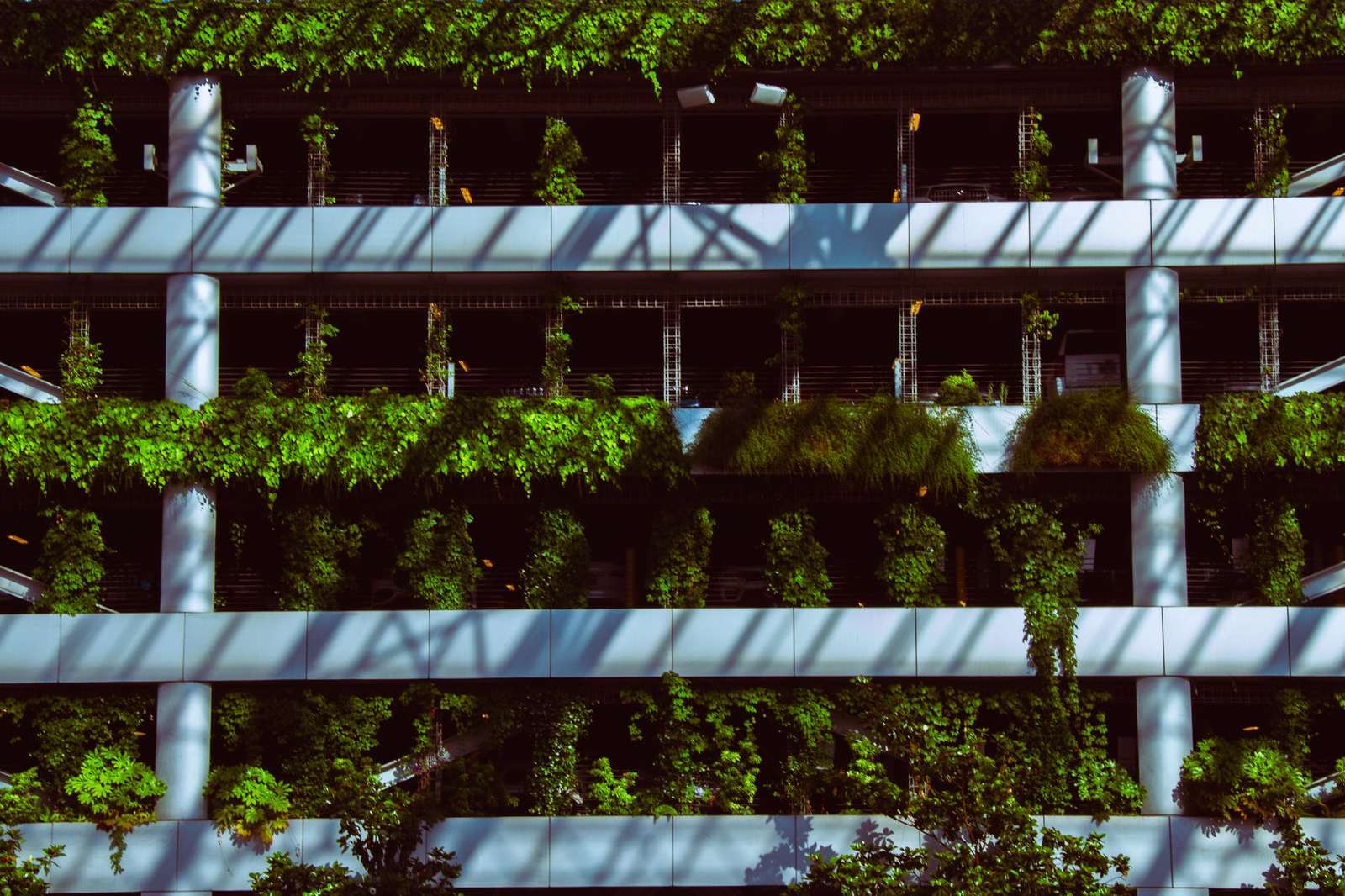
Architecture also shapes how people travel and what they visit. If you are planning trips around notable buildings, the guide to sustainable travel is a good place to continue.
Frequently asked questions
How much of global emissions come from buildings?
Show answer
As reported on May 23, 2026, buildings and construction account for nearly 37 per cent of global emissions and 28 per cent of energy use, according to the UNEP and Global Alliance report.
Is better energy efficiency enough on its own?
Show answer
No. Energy intensity has improved by 8.5 per cent since 2015, yet operational emissions still rose by 1 per cent in 2024 because the amount of floor area keeps growing.
Do green building certifications solve the problem?
Show answer
They help, but they are not sufficient. Certifications have nearly tripled, while the report coverage says progress has slowed since 2020 as construction outpaces decarbonisation.
Where should a project start?
Show answer
Start by asking whether an existing building can be reused, then reduce energy demand through design, and only then choose clean energy supply. Local climate and building codes should guide the details.