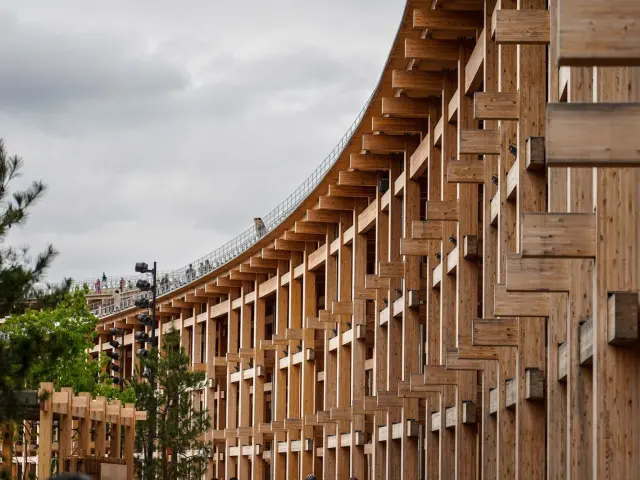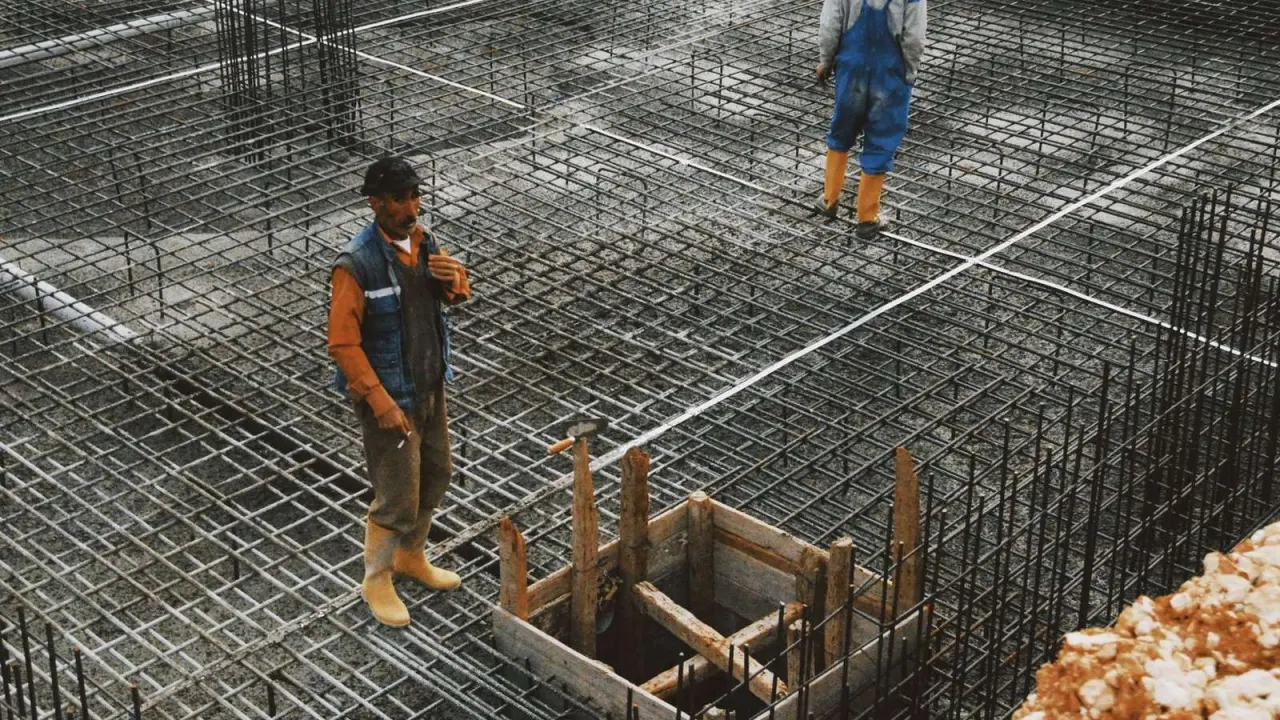
Wondering where your building’s carbon really comes from? Embodied carbon in buildings is the emissions from making materials and constructing, and in a new build or major refurbishment it can exceed 50% of whole life carbon.
Embodied carbon is one piece of the wider picture of sustainable building, and this guide explains what it is and how it gets cut.
| Item | Value |
|---|---|
| Buildings and construction share of global CO2 emissions | 37% (UNEP and Yale CEA release, September 2023) |
| Embodied share of a new build or major refurbishment’s whole life carbon | More than 50% (WBCSD, November 2022) |
| Emissions from repurposing a building versus new construction | 50-75 per cent fewer |
| Share of global emissions from concrete, steel and aluminium | 23 per cent |
| Potential sector savings from bio-based materials by 2050 | Up to 40 per cent in many regions |
| Operational carbon’s share of sector emissions in coming decades | Falling from 75 per cent to 50 per cent |
These figures come from the UNEP and Yale CEA news release and the WBCSD article. They can change as new reports appear, so check the source before you rely on them.
What embodied carbon covers
The WBCSD describes up-front emissions as embodied carbon: the emissions associated with the materials and the construction process. That means the carbon released before anyone switches on a light.
The UNEP and Yale CEA report asks decision-makers to look at the whole life cycle, because buildings contain materials produced in regions across the globe. The stages it names are:
- extraction of raw materials
- processing
- installation
- use
- demolition
The other side of the ledger is operational carbon, which the same report says encompasses heating, cooling and lighting. If you want to look at that side, our guide to natural ventilation in buildings covers one way to reduce cooling demand.
Why the hidden share is growing
As of the September 2023 release, the buildings and construction sector was already responsible for 37% of global CO2 emissions. Rapid urbanisation means that every five days the world adds buildings equivalent to the size of Paris.
Most climate action so far has targeted operational carbon. Thanks to cleaner electricity grids and renewable energy, that share is set to fall from 75 per cent to 50 per cent of the sector in coming decades, so building materials are set to dominate the remaining emissions.
The WBCSD put the built environment at close to 40% of total global CO2 emissions, or 14 gigatons per year. It adds that embodied carbon can already account for more than 50% of the whole life carbon footprint of a new build or major refurbishment project.
Floor space and raw materials use may nearly double by 2060, according to Yale Architecture’s summary of the same UN report. More new building without a change in materials would push the embodied share higher still.
The Avoid-Shift-Improve approach
The report “Building materials and the climate: Constructing a new future” was published by UNEP and the Yale Center for Ecosystems in Architecture under GlobalABC. It sets out a three-pronged solution, described in the news release:
- Avoid. Build less by repurposing existing buildings, which the report calls the most valuable option, generating 50-75 per cent fewer emissions than new construction. It also favours using less material, or materials with a lower carbon footprint that are easy to reuse or recycle.
- Shift. Move to ethically and sustainably sourced renewable bio-based materials, including timber, bamboo and biomass. Properly managed, this could bring savings of up to 40 per cent in the sector by 2050 in many regions, though more policy and financial support is needed.
- Improve. Decarbonise the conventional materials that cannot be replaced. Concrete, steel and aluminium account for 23 per cent of overall global emissions today, and the report names glass and bricks too.
For that third step, priorities include electrifying production with renewable energy, scaling innovative technologies and increasing the use of reused and recycled materials. Our guide to recycled building materials looks at the reuse and recycling side in more detail.
Why reusing what exists comes first
The report’s case studies come from Canada, Finland, Ghana, Guatemala, India, Peru and Senegal. They show that developed economies can devote resources to renovating existing ageing buildings, while emerging ones can leapfrog carbon-intensive methods to low-carbon alternatives.
Sheila Aggarwal-Khan of UNEP’s Industry and Economy Division noted that most buildings were once constructed from locally sourced earth, stone, timber and bamboo. She said modern concrete and steel often give only the illusion of durability, usually ending up in landfills.
The release also says that if future building materials are derived from carbon capture, buildings could become carbon negative. It adds that capture methods need further research and development, so treat that as a possibility, not a result.
Targets and signals to watch
In its November 2022 article, the WBCSD said the built environment needs a halving of emissions by 2030 and net zero over the full life cycle by or before 2050. By 2030, it said, embodied carbon needs to be reduced by at least 40%.
Timing matters because projects have long lead times: from a few years to 15-20 years from planning to operation. A project entering planning now therefore has to target the performance expected later in the decade.
The WBCSD pointed to signs of change as of its 2022 article:
- some cities, such as London and New York, had started demanding whole life carbon assessments on all projects
- national governments, including Denmark and Finland, had issued strategies for sustainable construction
- only very few building projects calculated and reported their full carbon footprint
How can you reduce embodied carbon on a project?
The sources point to a few practical habits for owners, designers and builders. The WBCSD says it is possible to immediately halve the up-front CO2 emissions of building projects through the steps below.
- Set explicit carbon targets from the start of the project.
- Collaborate along the value chain.
- Share data openly and widely.
- Ask for Whole Life Carbon assessments, so evidence builds up for benchmarking.
- Weigh repurposing an existing building before choosing new construction.
These are the WBCSD’s and UNEP’s recommendations, not a guarantee for any single building. Local climate, culture and available materials shape what works, as the UN report itself stresses.
Frequently asked questions
What is the difference between embodied and operational carbon?
Show answer
Embodied carbon covers emissions from producing materials and constructing a building. Operational carbon covers heating, cooling and lighting during use, according to the UNEP and Yale CEA release.
How much of a building’s carbon is embodied?
Show answer
It varies by project, so no single share fits every building. In the WBCSD’s November 2022 article, the figure for new builds and major refurbishments was above 50% of whole life carbon.
Is reusing a building better than building new?
Show answer
According to the September 2023 UNEP and Yale CEA release, repurposing existing buildings generates 50-75 per cent fewer emissions than new construction. It calls this the most valuable option.
Can the construction sector reach net zero?
Show answer
UNEP’s Sheila Aggarwal-Khan said in the September 2023 release that net zero is achievable by 2050 as long as governments put in place the right policy, incentives and regulation. That is a conditional statement, not a forecast.